What Each One Proves
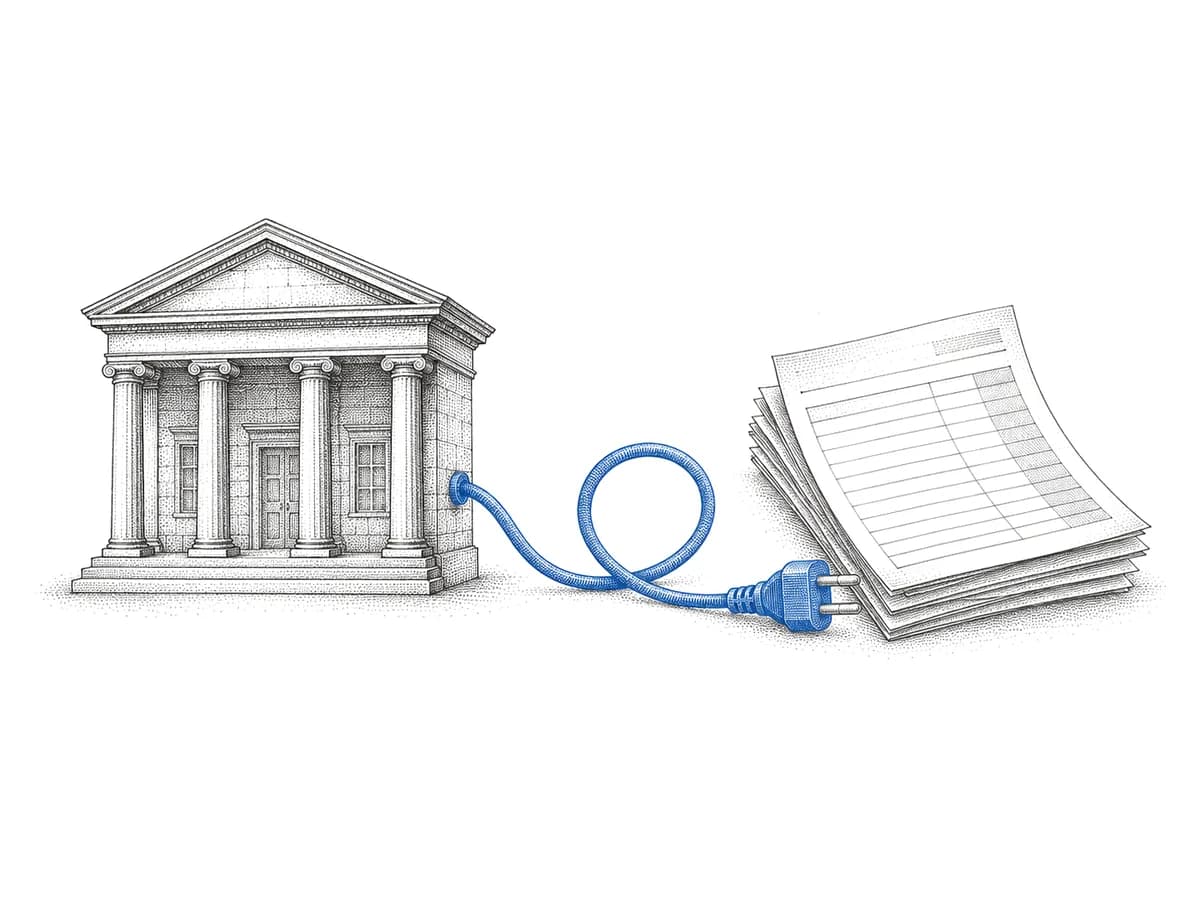
Both show the same kind of facts: deposits, their frequency and who sent them, and the balance over time. The difference is how those facts reach you. A connection pulls them from the bank after the applicant signs in and authorizes it. A statement is a file the applicant downloads, and possibly changes, before sending it.
| Question | Bank connection | Uploaded statement |
|---|---|---|
| Where does the data come from? | The bank, after the applicant signs in and consents | A PDF or screenshot the applicant sends |
| Can the applicant edit it first? | No, it does not pass through their hands | Yes, PDFs are easy to alter |
| Is the account really theirs? | The applicant signed in to it | The name on the PDF says so |
| How current is it? | As of the pull | As of the date the statement was produced |
| What does the applicant need? | Online banking credentials and a bank that can be connected | Access to their statements |
| Works for banks outside Canada? | Often not | Yes |
| How much do you see? | Whatever the connection returns, which can be more than you need | Whatever pages the applicant chooses to send |
Neither one proves employment by itself. Regular deposits from an employer name on a payroll cadence come close, and they are the usual fallback when a payroll record is not available. PropTx Verify pulls income data from connected bank accounts and uses bank deposits to verify employment when payroll data is not available.
Which Is Easier to Fake?
The uploaded statement. A balance, a deposit amount or a payer name can be changed in a PDF editor, and templates for fake statements circulate online. What to check when uploads are all you have:
- Running balances that don’t add up from one line to the next.
- Fonts, spacing or alignment that shift on the lines that matter, usually the deposits.
- Pay deposits that land on weekends or bank holidays, or don’t match the net pay on the stubs.
- A statement period that stops just before the application, with no explanation.
- A single large deposit shortly before the application, which deserves a question rather than a conclusion.
A connection removes the editing step, but read the result with the same care. A payer name is whatever the bank shows, and some employers pay through a payroll company whose name differs from the employer’s. Ask before you decide. More on the forgery signs in How to Spot Fake Bank Statements.
PropTx Verify runs fraud detection on manually uploaded documents and treats them as weaker evidence than a connected source, so the report reads differently depending on which route the applicant took.
What Consent Does Each Need?
Both need it, and both need it to be express. The Privacy Commissioner treats financial information as generally sensitive, and sensitive information generally calls for express consent.2 The applicant has to be told what is collected, why, and who will see it, whichever route they take.3
The practical difference is who collects the consent. With an upload, the landlord or agent is the one receiving the file, so they are responsible for explaining the purpose and safeguarding the copy. With a connection, the applicant usually authorizes the pull inside the screening service, and the agent receives the result rather than the raw statement.
Canada’s rules for bank connections are changing. The Consumer-Driven Banking Act received royal assent in March 2026, with oversight assigned to the Bank of Canada, and regulations to bring it into force were published as a proposal in June 2026.4 The same publication notes that about nine million Canadians share their banking credentials with third-party services through screen scraping, which it describes as carrying security, liability and privacy risks.4 Ask any screening provider how its bank connection works and what the applicant is agreeing to.
What About Privacy?
Both routes expose more than income. Transactions can reveal a person’s health spending, religious giving or receipt of public assistance, and in Ontario receipt of public assistance is one of the grounds on which a landlord may not refuse accommodation.1 Look for the income you need and ignore the rest.
Collect only what the purpose requires and don’t keep it longer than necessary.3 Uploads make that harder, because the full statement now sits in an email inbox or a shared drive. A connection that returns an income summary can keep the agent from holding raw transaction history at all, but only if the provider is set up that way, so ask.
Whatever you learn is income information, and Ontario limits its use. A landlord may weigh income only together with the credit references, rental history and credit check also requested, unless income is the only information that comes back.1 See What Can a Landlord Ask on a Rental Application in Ontario?.
How Does It Feel for the Applicant?
A connection is faster for most applicants: sign in, approve, done, with no hunting for three months of PDFs. But some people are uncomfortable signing in to their bank through a third party, and that concern is reasonable given the federal government’s own description of credential sharing.4 Treat a refusal to connect as a preference, not a red flag.
Statements are the better fit for some applicants:
- Newcomers whose income history is in a bank outside Canada.
- Applicants whose bank or credit union can’t be connected.
- Self-employed applicants who need to show a business account alongside a personal one. See Screening Self-Employed and Gig-Income Applicants.
- Anyone who declines to connect after hearing what is shared.
In PropTx Verify, payroll is the fallback when bank data is not available, and applicants who connect neither can upload documents.
This page is general information about Ontario and federal privacy law, not legal advice. Where a decision turns on the facts, get advice from a paralegal or lawyer.
Which Should You Use?
Choose a bank connection if the applicant banks in Canada, agrees to connect and you need to rely on the income figure; it removes the editing risk and keeps raw statements off your desk. Choose uploaded statements if the applicant declines, banks outside Canada or uses an institution that can’t be connected, then check the arithmetic, compare the deposits with the pay stubs and, where it matters, confirm the employer by phone. Either way, weigh the result with the credit and rental history, not alone.
Questions
Can a Landlord in Ontario Ask for Bank Statements?
Privacy law doesn’t prevent the request, but the landlord should explain why, collect no more than needed and not keep copies longer than necessary.3 Income may be weighed only with credit and rental history.1
Is Connecting a Bank Account Safe for the Applicant?
It depends on how the provider connects. Canada passed a consumer-driven banking law in 2026 to replace credential sharing with an overseen framework, and its regulations were still proposed in June 2026.4 Ask the provider what the applicant shares.
How Many Months of Bank Statements Should You Ask For?
Ask for enough to see the pay pattern, often two or three pay cycles, and no more. Privacy guidance says to collect only what the stated purpose needs.3
Should You Refuse an Applicant Who Won’t Connect Their Bank?
No. Offer statements or payroll instead. Connecting shares sensitive financial information, which calls for the applicant’s express consent, and declining is not evidence of anything.2
Sources
- O. Reg. 290/98: Business Practices Permissible to Landlords in Selecting Prospective Tenants for Residential Accommodation
Government of Ontario, e-Laws, s. 1(3) to (5) and s. 4. Accessed October 22, 2026.
- Guidelines for obtaining meaningful consent
Office of the Privacy Commissioner of Canada, Form of consent; Sensitivity. Accessed October 22, 2026.
- Privacy in the landlord and tenant relationship
Office of the Privacy Commissioner of Canada, How should landlords be obtaining my consent?; Can a landlord ask to see my driver’s licence? My tax information? My pay stubs?. Accessed October 22, 2026.
- Consumer-Driven Banking Regulations (proposed), Regulatory Impact Analysis Statement
Canada Gazette, Part I, Vol. 160, No. 26 (June 27, 2026), Executive summary: Issues and Description; Background. Accessed October 28, 2026.